


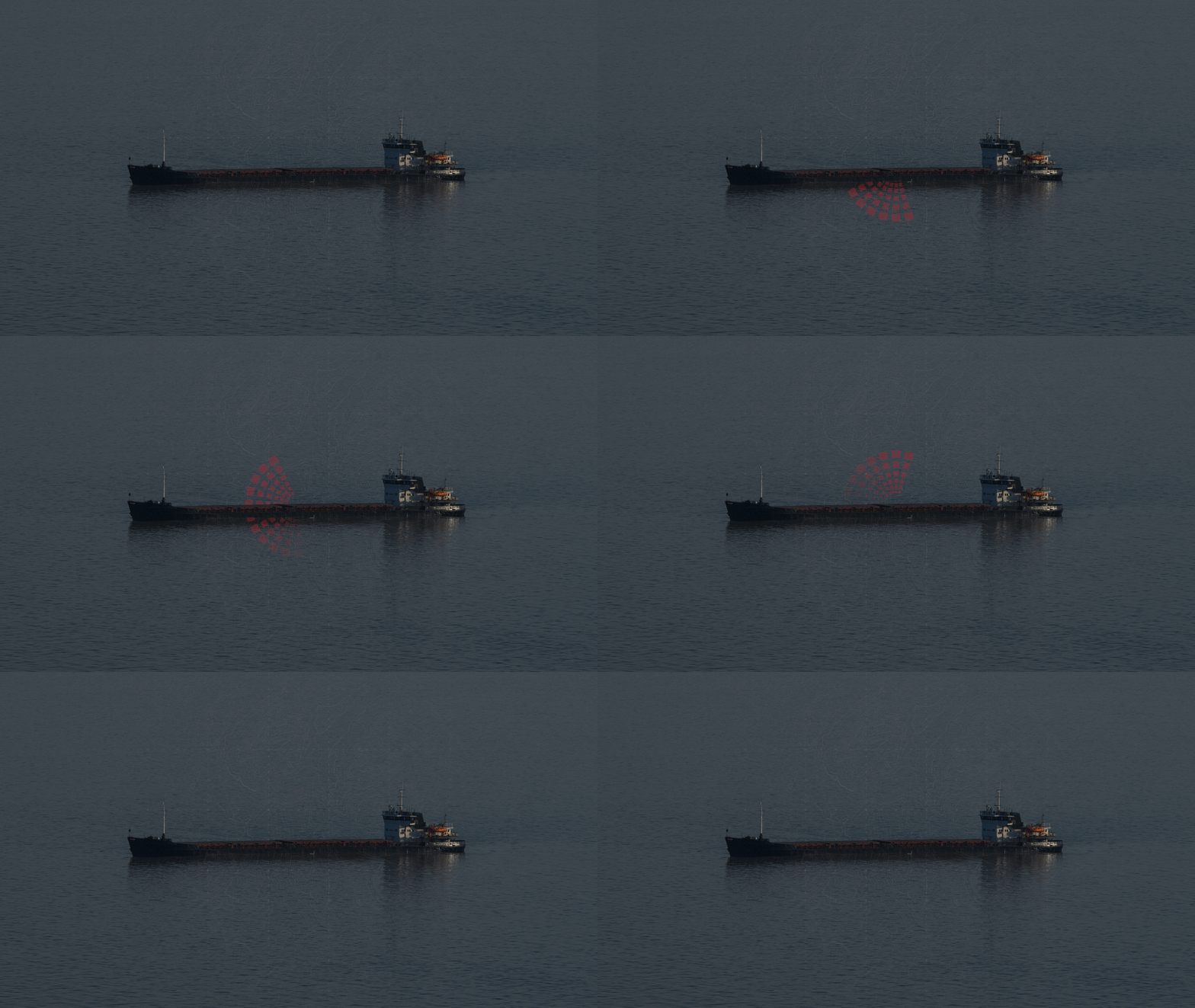
The Straits of Malacca and Singapore are among the world’s most important maritime corridors. They connect major trading economies, carry significant commercial traffic and remain strategically important to the security and stability of the region.
For Singapore, maintaining maritime security in such an environment requires more than surveillance coverage. It requires the ability to understand activity at sea, identify what matters, establish patterns and anomalies, and provide decision-makers with reliable information when it matters.
This is where the next generation of maritime intelligence is emerging.
Artificial intelligence (AI), advanced analytics and networked sensors are changing how maritime organisations detect, identify and understand activity at sea. Yet the strategic value of these technologies will ultimately depend on something beyond the technology itself: how effectively they are developed into operational capability.
Bringing Maritime AI Into an Operational Context
Citadelle recently supported Windward Maritime AI in its engagement with Singapore’s maritime security stakeholders, exploring the potential application of AI-enabled maritime situational awareness capabilities within the Singapore operating environment.
Windward Maritime AI brings together maritime data, behavioural analytics and visual intelligence to provide a more comprehensive understanding of vessel activity and behaviour. Its capabilities support vessel screening, anomaly detection, risk assessment and maritime intelligence, while visual intelligence adds another layer of information by transforming shore, buoy or vessel-mounted cameras into identity-aware sensors.
The platform moves from See, to Identify, to Profile. Vessels are detected and tracked, their physical characteristics are used to establish persistent identities, and accumulated observations contribute to vessel histories and behavioural analysis. This creates a structured and evidence-backed view of vessel activity, supporting a deeper understanding of what is happening across the maritime environment.
The significance of these capabilities is broader than any individual technology. They represent a shift from maritime surveillance towards maritime understanding, where data from multiple sources is brought together to support a more informed operational picture.
Engagement in Singapore
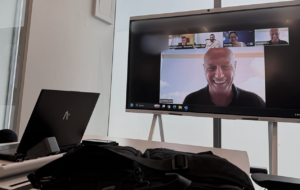
Prior to the meeting, Citadelle conducted a series of Zoom sessions with the Windward Maritime AI team to understand their respective technologies, discuss potential applications and provide consultation on how their capabilities could be positioned within a Singapore maritime security context.
These discussions provided an opportunity to bridge technology with operational considerations before the teams met with Singapore stakeholders.
The subsequent engagement brought these discussions into a practical setting, allowing the capabilities and potential applications to be explored directly with relevant maritime security stakeholders.
For Citadelle, this represents an important part of capability development: ensuring that technology is considered through the lens of operational requirements, rather than evaluated in isolation.
Meeting with Singapore’s Maritime Security Community
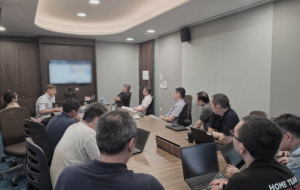
Citadelle with representatives from Windward Maritime AI during the engagement with Singapore maritime security stakeholders.
The meeting provided an opportunity to discuss how emerging maritime AI capabilities could contribute to situational awareness and support the evolving requirements of maritime security.
While the technologies involved are sophisticated, the fundamental question remains straightforward:
How do we turn better information into better operational capability?
That question sits at the heart of Citadelle’s approach to defence and security consulting.
From Surveillance to Understanding
For decades, maritime security has depended on collecting information from multiple sensors and systems. The challenge has increasingly become one of interpretation.
A vessel’s AIS transmission provides useful information. A radar track provides another perspective. Satellite imagery, radio-frequency information, cameras and other sensors provide further pieces of the operating picture.
The question for a modern maritime security organisation is how these pieces are brought together.
Visual intelligence provides an important additional layer because it observes the physical vessel rather than relying solely on what the vessel reports. Windward Maritime AI’s approach is designed to establish vessel identity through visual characteristics, correlate this against AIS information and identify instances where physical observations and broadcast identity diverge.
Over time, these observations can form a structured history of vessel movements and behaviour, including routes, speeds, cargo states, visit patterns and anomalies.
This illustrates an important principle for defence technology development.
The objective should not be to collect more data.
The objective should be to create better understanding from the data available.
The Capability Development Challenge
For defence and security organisations, introducing AI is not simply a technology acquisition exercise.
It is a capability development challenge.
A new system has to fit within existing command structures, operating concepts, information flows and mission requirements. It needs to answer practical questions about where information comes from, who uses it, how it is interpreted, how decisions are made and how the capability integrates with existing systems.
This requires an understanding of operations as well as technology.
COL (Ret) Ivan Tan, CEO of Citadelle, brings extensive operational experience from the Republic of Singapore Navy and the Special Operations Task Force environment to Citadelle’s consulting engagements. His operational expertise is complemented by the strategic, naval, and leadership experience of RADM Edwin Leong, former Chief of Staff – Naval Staff and now Director, Strategic Partnerships and Defence Program (Consulting) at Citadelle. Together, their combined experience spans operational command, strategic leadership, defence, and specialised military operations.
Their combined experience informs how Citadelle approaches emerging defence and security technologies: by looking beyond the product and considering how a capability could function within the wider operational environment.
This perspective is increasingly relevant as defence organisations assess technologies that are developing faster than traditional acquisition and capability-development cycles.
Singapore as a Maritime Security Environment
Singapore provides a particularly relevant environment for this discussion.
The surrounding waters combine dense commercial traffic, critical maritime infrastructure and significant regional connectivity. The Straits of Malacca and Singapore form part of a wider maritime environment in which commercial, security and national interests intersect.
In such an environment, situational awareness is not an abstract requirement.
The ability to establish what is happening at sea, understand normal patterns and identify activity that warrants further attention is fundamental to effective maritime security.
AI-enabled systems have the potential to strengthen this capability by helping organisations process information at scale and identify relationships or patterns that would otherwise require significant human effort.
But the human and operational dimensions remain central.
AI should support the decision-maker, not replace the operational framework around which the decision is made.
Building Capability, Not Buying Technology
This is a distinction Citadelle believes will become increasingly important across the defence and security sector.
The next generation of military capability will involve increasingly sophisticated combinations of sensors, artificial intelligence, autonomous systems, data platforms and human operators.
The challenge will be integrating these technologies into coherent capabilities.
That requires a different approach to consulting.
It requires understanding the mission, assessing the technology, identifying the capability gap and considering how the resulting system fits into the wider force structure and operating environment.
For maritime security, this could involve integrating multiple sources of maritime intelligence into a more comprehensive operating picture.
For military operations, the same principle applies across different capability areas. Technology needs to be connected to operational requirements, supported by appropriate processes and developed with the end user in mind.
The Next Generation of Defence Capability
The Windward Maritime AI engagement reflects a broader direction from Citadelle.
As defence and security organisations evaluate AI and other emerging technologies, there is an increasing need for partners who understand both sides of the equation: the technology and the operational environment.
Citadelle’s role is to help connect those two worlds.
The goal is not technology for its own sake.
It is to help organisations identify where technology could strengthen capability, understand what is required to implement it and develop solutions that are relevant to operational needs.
The future of maritime security will involve more data, more sensors and increasingly sophisticated AI.
The strategic value will come from how effectively those technologies are transformed into usable capability.
For Citadelle, that is the central focus of capability development: connecting operational experience, emerging technology and strategic requirements to help build the next generation of defence and security capability.